
Wichita Falls, TX · Answered 24/7
Plumbing Leak Detection and Water Leak Repair in Wichita Falls, TX
A hidden water leak wastes water, feeds mould and undermines slabs. Our plumbing leak detection service finds the exact point of failure first without tearing up your house, then opens the smallest access needed for the water leak repair.
- Slab leak detection, acoustic listening and thermal imaging
- Water main repair, slab leaks, wall, ceiling and yard line leaks
- You see the evidence before anything is opened

Direct answer
How do you find a water leak you cannot see?
A concealed water leak is located by isolating the system and then listening for it. The meter is checked with every fixture closed to confirm loss, sections are isolated with valves and pressure gauges to narrow the leak to a supply or drain branch, and acoustic equipment picks up the sound of pressurised water escaping through the slab or wall. Thermal imaging maps temperature differences from hot-side leaks, and tracer methods confirm the point. Whether you need slab leak detection, water main repair or a pipe leak repair, only then is anything opened, and only at the located spot.
Water bill jumped with no explanation?
Call (940) 310-1165 and we will confirm whether you have a real leak, find exactly where it is, and show you the evidence before a single tile comes up. Locating first is what keeps the repair small.
The leak you cannot see
Concealed leaks do their damage quietly and continuously
Unlike a burst pipe, a concealed leak makes no scene. It seeps into the slab, the wall cavity or the soil under the foundation, and the first evidence is usually indirect: a bill that climbed, a floor that feels warm in one spot, a musty smell in a closet, or a patch of yard that stays green in August.
It is a structural problem as much as a plumbing one. Continuous moisture under a slab washes fines out of the supporting soil and contributes to movement in the expansive clay this region sits on. Inside a wall it saturates bottom plates and sheathing and gives mould a permanently damp substrate to grow on.
Guesswork makes it worse. Opening drywall or breaking slab in the wrong place doubles the cost of a repair that had one right answer. Location is the part of the job that saves money, and it is the part most often skipped.
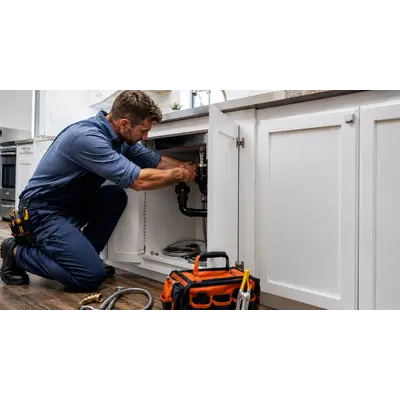
How location works
Acoustic and Thermal Leak Detection Methods We Use in Wichita Falls
Confirmation first. With every fixture closed and the water heater isolated, the meter dial tells us whether water is leaving the system at all, and roughly how fast. A leak that does not show at the meter is a drain-side or condensate problem, and that changes the entire approach.
Then isolation. Valving off sections and applying static pressure with a gauge narrows the loss to a branch: the service line from the meter, hot side, cold side, or a specific run. Watching gauge decay tells us a great deal before any equipment goes on the floor.
Then acoustic and thermal work. Pressurised water escaping through concrete makes a characteristic sound that ground microphones pick up through flooring; thermal imaging maps hot-side leaks by the heat signature they push into the slab or wall. Where needed, we introduce a safe tracer to confirm the exact point.
The repair follows the location, not the other way around. That may mean a targeted slab break and a section repair, a reroute above ground through the attic to abandon a failed under-slab run, or a straightforward wall access and pipe replacement.
How the job runs
Our leak detection and repair process
Detection is a process of elimination. Doing it in sequence is what keeps the access hole small and the repair honest.
- 01
Meter verification
Everything is closed and the meter is observed. This separates a genuine supply leak from a running toilet flapper or an irrigation valve that never fully shuts.
- 02
System isolation
Valves and gauges divide the system so the loss can be attributed to the service line, the hot side, the cold side or a single branch.
- 03
Acoustic sweep
Ground microphones and listening discs follow the pipe route and find the loudest point, which is the escape point.
- 04
Thermal confirmation
Infrared imaging cross-checks the acoustic result on hot lines and shows moisture spread in walls, ceilings and flooring.
- 05
Minimum access
Only the located area is opened, whether that is a slab cut, a small drywall access or an exposed run in the attic or crawl space.
- 06
Repair, test and restore
The failed section is replaced, the system is brought back to pressure and held on a gauge, and the meter is rechecked with everything closed to prove the loss has stopped.

Warning signs
Signs of a hidden leak in your home
- A water bill that climbed with no change in household use
- A warm or hot spot on a tile or laminate floor over the slab
- The sound of running water when every fixture is off
- Cracking, lifting or discoloured flooring in one localised area
- A musty smell in a closet, cabinet or along one wall
- Low pressure at fixtures that used to run strong
- A patch of yard that stays wet or unusually green during dry weather
Before we arrive
Useful things to do before we get there
- Turn off every fixture, appliance and irrigation zone, then photograph your meter reading. A second photo an hour later is genuinely useful data.
- Check each toilet by adding a few drops of food colouring to the tank. Colour appearing in the bowl without flushing means the flapper is passing water and can mimic a leak.
- Note where and when you hear water running, and whether the warm spot on the floor changes with hot water use.
- Clear access to the water heater, the main shut-off and any wall or floor area you suspect.
- Do not start cutting drywall or flooring yourself. Undisturbed conditions make the acoustic sweep more accurate.
Why us
Why homeowners here keep our number
Location before demolition
The whole point of leak detection is a small hole in the right place. We do not open walls to go looking.
Equipment, not intuition
Ground microphones, thermal imaging, pressure gauges and tracer methods, used together, so the result can be shown to you rather than asserted.
Slab experience in clay soil
Under-slab leaks in this region come with soil movement and foundation implications. We repair with that in mind and will tell you when a reroute beats a slab break.
Documentation for claims and sales
Photos, thermal images and readings are provided, which matters if you are dealing with an insurer or a pending property sale.
Verified repair
We do not just fix and leave. The system is held on a gauge and the meter is rechecked so you have proof the loss has stopped.
Leak detection in Wichita Falls
Slabs, clay and why leaks here behave the way they do
Most homes built here since the 1960s sit on slab-on-grade foundations over expansive clay. That soil swells when it gets wet and shrinks hard during the dry heat of a North Texas summer. The resulting movement stresses under-slab supply lines and drain joints, which is why slab leaks are a routine call in this city rather than an exotic one.
A leak under a slab makes the movement problem worse in a very direct way. Continuous moisture in one area keeps that section of clay expanded while the rest of the perimeter dries and contracts, and differential movement is what cracks slabs and sticks doors. Finding a slab leak early is a foundation issue, not only a plumbing one.
Yard and service line leaks are common too, particularly on older streets near downtown, Floral Heights and the university area, where original galvanised or early plastic service lines are still in the ground. Out toward Iowa Park, Lakeside City and Pleasant Valley, long service runs from the meter to the house add distance and more opportunity for a buried failure.
Pricing
What does leak detection and repair cost in Wichita Falls?
Leak detection costs depend on the type of detection needed and where the leak turns out to be. A visible supply line leak under a cabinet is straightforward. A concealed slab leak that requires acoustic equipment, thermal imaging and pressure isolation to locate is a more involved diagnosis, and the repair may include concrete cutting and rerouting.
We quote detection and repair separately so you know what each part costs. The detection fee is applied toward the repair if we do both. You get a written price before any cutting, trenching or concrete work begins, and documentation of the leak location for insurance or real estate purposes.
Service area
Plumbers for Wichita Falls and the towns around it
We run leak detection and repair calls across Wichita Falls and every town in our 940 service area. Pick your town for local detail, or call and we will confirm coverage in seconds.
FAQ
Questions we get asked on the phone
Can you find a leak without breaking the slab?
How accurate is acoustic leak detection?
What is a slab leak reroute?
Will my homeowners insurance cover a slab leak?
How much water does a small leak actually waste?
Do you find leaks in irrigation and pool lines?
Related services
Other work that often comes with this job
Pipe Repair & Repiping
Section repairs and planned whole-home repipes in PEX or copper.
Read moreEmergency Plumbing
Live answer around the clock for failures that cannot wait until morning.
Read moreWater Heater Repair & Installation
Repair, replacement and code-correct installs for gas, electric and tankless.
Read moreOne call ends it
A hidden leak is charging you twice
Once for the water on your bill, and again for the framing, flooring and slab it is soaking every day it runs. Call (940) 310-1165 and we will locate it precisely, repair it properly and leave you with a system that holds pressure.
Call (940) 310-1165